
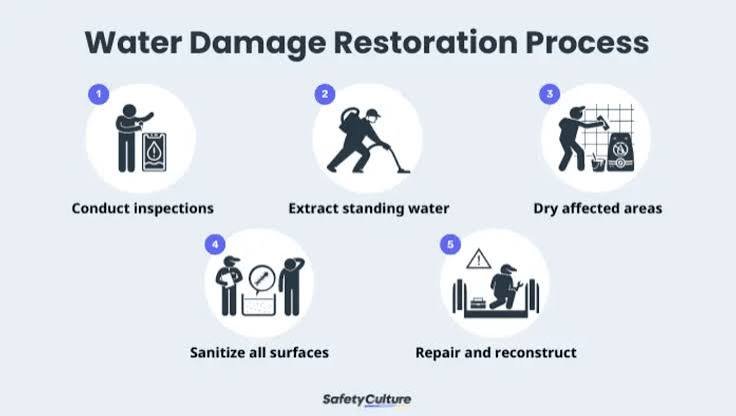
Water damage is one of the most common problems affecting residential and commercial properties. Whether caused by a burst pipe, leaking roof, overflowing appliance, severe storm, or plumbing failure, unwanted water damage process water can damage building materials, personal belongings, and essential structural components. If the problem is not addressed promptly, moisture may also encourage mold growth, create unpleasant odors, and lead to expensive repairs.
Understanding the water damage process is essential for property owners who want to protect their investments and restore their spaces safely. From identifying the source of the water to completing the final repairs, every stage plays an important role in achieving a successful restoration. With a systematic approach and professional assistance when necessary, property owners can minimize damage and return their buildings to a safe, comfortable condition.
Step 1: Identify the Source of Water Damage
The first step in the water damage process is determining where the water originated. Common sources include damaged plumbing, leaking water heaters, faulty washing machines, roof leaks, foundation cracks, and flooding caused by heavy rainfall.
Identifying the source is essential because restoration efforts will be ineffective if water continues entering the property. For example, drying a ceiling without repairing the leaking roof may allow moisture to return during the next rainfall.
Property owners should address the source as soon as it is safe to do so. This may involve contacting a licensed plumber, roofing contractor, or other qualified professional. If water is near electrical outlets, appliances, or wiring, occupants should avoid entering the affected area until it has been declared safe.
Step 2: Assess the Extent of the Damage
Once the source has been controlled, the next stage involves evaluating the affected areas. Water can travel beyond the location where a leak first appears, spreading through flooring, wall cavities, insulation, and ceilings.
A thorough inspection helps determine which materials have absorbed moisture and which areas require immediate attention. Visible signs of water damage may include discoloration, peeling paint, swollen wooden surfaces, bubbling flooring, and damp carpets.
Professional restoration technicians often use moisture meters, thermal imaging equipment, and other inspection tools to identify hidden moisture. These assessments help establish the appropriate restoration plan and reduce the risk of overlooking affected materials.
The assessment should also consider the type of water involved. Clean water from a supply line presents different concerns from water contaminated by sewage or outdoor flooding. Contaminated water may require specialized protective measures, professional cleaning, and the removal of certain materials.
Step 3: Remove Standing Water
After the initial assessment, standing water must be removed from the property. Water left on floors and other surfaces can continue soaking into porous materials, increasing the likelihood of further damage.
Depending on the severity of the incident, restoration professionals may use suitable pumps, wet vacuums, and water extraction equipment. These tools help remove accumulated water more efficiently than ordinary household cleaning methods.
The extraction process is particularly important in basements, ground-floor rooms, storage areas, and commercial buildings where water can collect quickly.
However, not every situation is appropriate for immediate entry or do-it-yourself cleanup. Floodwater may contain harmful contaminants, and water-damaged electrical systems can present serious hazards. Professional assistance is recommended whenever safety is uncertain or the damage is extensive.
Step 4: Dry the Affected Areas Thoroughly
Removing visible water does not mean the restoration process is complete. Moisture can remain trapped inside walls, beneath flooring, within insulation, and behind cabinets. Thorough drying is necessary to prevent continued deterioration.
Restoration teams commonly use commercial air movers and dehumidifiers to improve airflow and remove moisture from the environment. The specific equipment and drying strategy depend on the building materials, the amount of water involved, and the conditions inside the property.
During this stage, technicians monitor moisture levels to determine whether affected areas are drying properly. This helps prevent repairs from beginning before the building materials are ready.
Proper drying is especially important because prolonged dampness can encourage mold growth. It can also cause wood to swell, flooring to separate, and drywall to weaken. A controlled drying process helps reduce these risks and creates a better foundation for the remaining restoration work.
Step 5: Clean and Sanitize Affected Surfaces
Water damage may leave behind dirt, debris, unpleasant odors, and contaminants. Cleaning is therefore an essential part of restoring the property.
For incidents involving clean water, appropriate cleaning products and methods may be sufficient for many affected surfaces. However, water originating from sewage, contaminated floodwater, or other hazardous sources requires a more specialized response.
Professionals assess which materials can be safely cleaned and which need to be removed. Porous materials that have absorbed contaminated water may not be suitable for restoration.
Cleaning and sanitizing should be performed according to the type of contamination and the manufacturer’s recommendations for each product. Simply applying a disinfectant over a wet or dirty surface may not provide effective results.
A thorough cleaning process helps improve indoor conditions and prepares the affected areas for repairs.
Step 6: Address Mold Risks
Mold prevention is another important consideration during water damage restoration. Mold can begin growing on damp materials when suitable moisture and environmental conditions persist. It may develop in concealed locations, making early moisture control especially valuable.
The best preventive measure is to remove excess water and dry affected materials promptly. Property owners should not assume that a surface is completely dry simply because it looks normal.
If mold is already present, the response should depend on the extent of the growth, the materials involved, and the potential for contamination to spread. Significant mold problems or those involving hidden areas may require qualified remediation professionals.
Attempting to conceal mold with paint or fragrance products does not solve the underlying problem. Successful restoration addresses both the visible damage and the moisture conditions that allowed the problem to develop.
Step 7: Repair and Replace Damaged Materials
Once the affected areas are sufficiently dry and any necessary cleaning or remediation has been completed, repair work can begin.
Some materials may be restored, while others require replacement. For example, a small section of damaged drywall may need to be removed and replaced, while certain hardwood floors may be repairable if their condition permits.
Depending on the severity of the incident, restoration work may include replacing insulation, repairing ceilings, refinishing floors, repainting walls, fixing damaged cabinetry, and addressing structural components.
Before rebuilding, contractors should confirm that the moisture problem has been resolved. Reinstalling materials over damp surfaces can trap moisture and contribute to future deterioration.
The repair stage should also include correcting the original cause of the water damage. Replacing a damaged ceiling without fixing the roof leak, for instance, leaves the property vulnerable to another incident.
Step 8: Conduct a Final Inspection
The final stage involves reviewing the completed restoration work and confirming that the property is ready for normal use.
A final inspection may include moisture measurements, checks for remaining damage, verification of completed repairs, and confirmation that the original water source has been addressed.
Property owners should review the work performed and retain relevant photographs, invoices, inspection reports, and insurance documentation. These records can be useful for future maintenance and insurance-related questions.
If any dampness, unusual odor, discoloration, or other warning sign remains, it should be investigated before the restoration project is considered complete.
Why Professional Water Damage Restoration Matters
Although minor spills may be manageable with ordinary cleaning, significant water damage often requires specialized equipment, technical knowledge, and a coordinated response.
Professional restoration services can help property owners identify hidden moisture, remove standing water, establish effective drying conditions, and determine which materials can be salvaged. Experienced technicians can also recognize situations involving contaminated water, potential mold growth, and structural concerns.
Another advantage of professional assistance is the organized management of the restoration process. Coordinating water extraction, drying, cleaning, repairs, and inspections helps reduce delays and supports a more reliable outcome.
Property owners should select qualified providers who explain their assessment process, communicate clearly, and document the work being performed. It is also sensible to contact the insurance company promptly and review the applicable policy before authorizing major repairs.
Conclusion
Understanding the water damage process allows property owners to respond more effectively when unexpected leaks or flooding occur. From identifying the source and assessing the affected areas to extracting water, drying materials, cleaning surfaces, addressing mold risks, and completing repairs, each step contributes to successful property restoration.
Prompt action can help limit additional damage, while careful inspections and appropriate professional support can reduce the likelihood of recurring problems. By following a structured restoration process and correcting the original source of moisture, homeowners and business owners can protect their properties, preserve valuable materials, and restore a safe and comfortable indoor environment.