
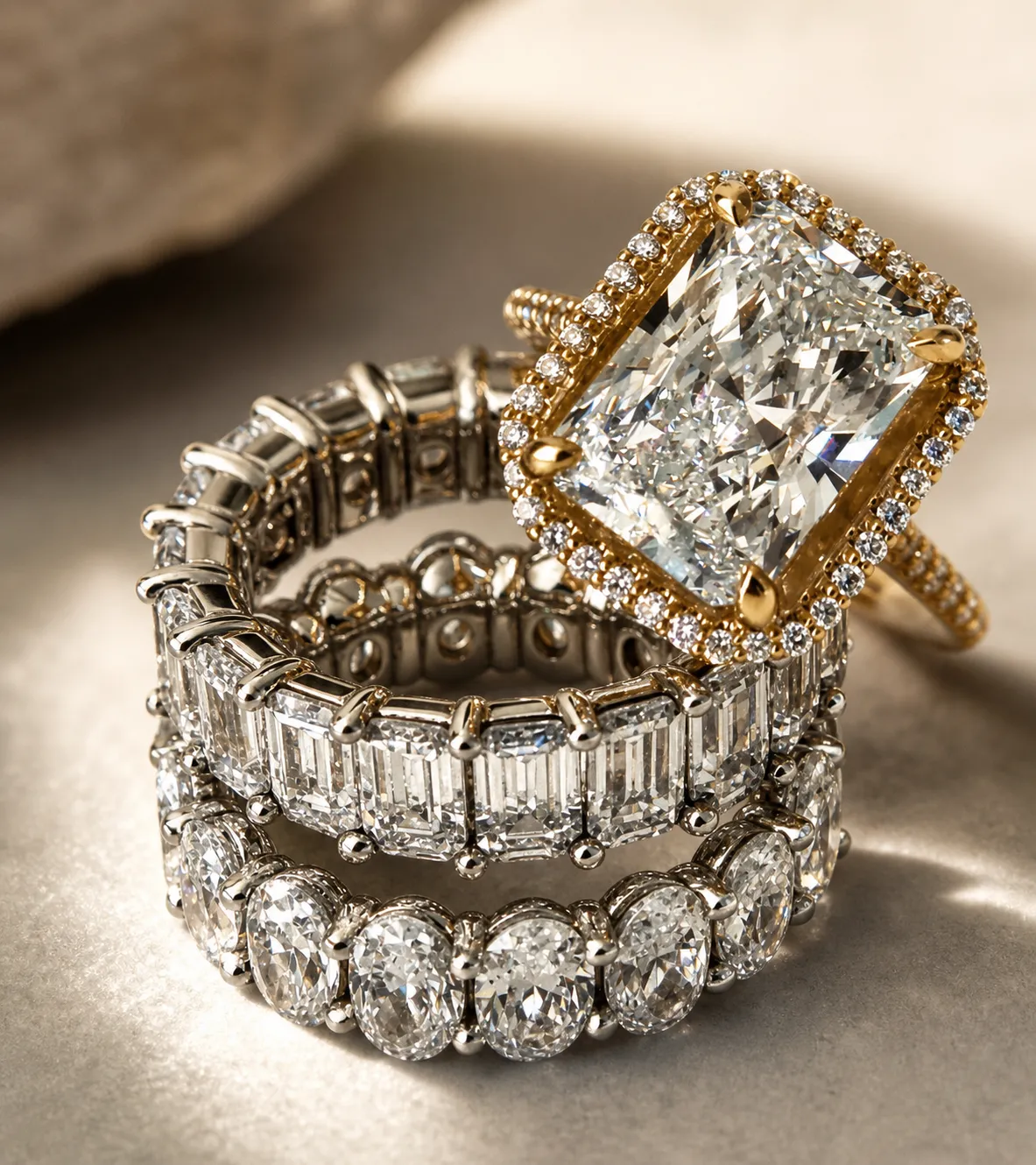
A bespoke ring once had to be imagined from a sketch and the jeweller’s description of its proportions. Now a customer may be able to rotate a digital model, see the height of the setting and compare two versions before any precious metal is committed. The benefit is greatest when the model answers a specific question. A polished rendering can be seductive even if the real piece would feel awkward.
The discussion about how innovation is reshaping the meaning of modern luxury has a practical side in bespoke jewellery. Digital design gives the maker and the wearer a shared view of details that used to be difficult to describe. It also gives them an opportunity to make clearer decisions before production begins.
Use a model to resolve dimensions
A three-dimensional design can show where the head meets the shoulders and what a ring will look like from underneath. Ask for key measurements alongside the images. A bezel can appear narrow on a large screen while taking up a considerable part of the view on the hand. A dimensioned drawing gives you a way to compare it with a ring you already wear.
Discuss stone measurements early. A model based on the actual stone is particularly useful if the gem has an asymmetrical outline or unusual depth. If the model uses a placeholder, ask which features will be revisited once the stone is chosen. Even a small difference in girdle shape can influence the amount of metal the setter needs.
Use a physical sample to judge fit
Some jewellers can produce a resin or other trial model for a fitting. Ask what the sample is intended to show. It can help you assess overall width, the position of the head and clearance for a wedding band. Its weight and surface will differ from the finished ring, and a jeweller can explain which impressions are reliable.
Try it at arm’s length and check how it passes a cuff. Place it beside any existing jewellery that will sit close. If you want a change, show the point on the model that creates the problem. An instruction such as lowering the outer edge is easier to act on when both people can see the same place.
Keep the approvals specific
Ask when the design becomes fixed and what changes would affect the cost. If you want to see one option with a thinner band and another with a lower stone, request separate views at the same scale. Make sure the jeweller confirms the minimum dimensions they can use safely. They may need more metal around a stone than the initial drawing suggests.
The finished piece still passes through manufacture, setting and hand finishing. Ask to see examples of the maker’s completed work. Examine how they finish edges and secure stones, since those results will shape the ring you wear. Keep a copy of the approved design and written specifications for future questions.
Final Thought
Digital tools are most valuable when they help you recognise and resolve one concern at a time. Use the model for shape and measurements, a fitting for comfort and the jeweller’s finished work as evidence of craftsmanship. Each brings a different part of the commission into view.
 Admin