
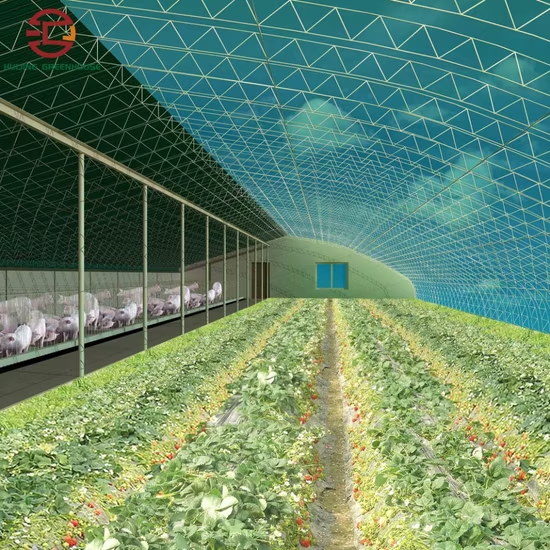
The Global Shift Toward Controlled Environment Farming
Modern agriculture is undergoing a major transformation as climate change, population growth, and food security challenges push farmers to adopt more efficient production methods. Among these innovations, greenhouse farming has become one of the most important solutions for sustainable food production. In this global movement, China greenhouse systems are emerging as a dominant force shaping the future of agriculture.
China has invested heavily in agricultural technology over the past few decades, and greenhouse development is one of its most successful achievements. From small rural farms to large commercial agribusinesses, greenhouse systems are now widely used across the country to ensure consistent crop production regardless of external weather conditions.
The rise of china greenhouse solutions is not accidental; it is the result of strategic planning, technological advancement, and large-scale manufacturing efficiency that makes greenhouse systems more affordable and accessible worldwide.
Advanced Technology Driving China Greenhouse Innovation
One of the key reasons China greenhouse systems are leading the global market is the integration of advanced agricultural technology. These systems are no longer simple plastic-covered structures; they are highly engineered environments designed to optimize plant growth.
Modern Chinese greenhouses often include automated temperature control, humidity regulation, smart irrigation systems, and AI-based monitoring tools. These technologies allow farmers to maintain ideal growing conditions throughout the year, increasing productivity while reducing resource waste.
Another important factor is the use of smart sensors. These sensors continuously monitor soil moisture, light intensity, and nutrient levels. In a china greenhouse setup, this data is processed in real time to make automatic adjustments, ensuring plants receive exactly what they need at each growth stage.
This level of precision agriculture is helping farmers achieve higher yields with fewer inputs, making greenhouse farming both economically and environmentally sustainable.
Cost Efficiency and Large-Scale Production Advantages
Cost efficiency is another major reason behind the success of china greenhouse systems. China’s strong manufacturing ecosystem allows greenhouse materials such as steel frames, plastic films, and irrigation systems to be produced at significantly lower costs compared to many other countries.
This affordability makes greenhouse farming accessible not only to large agricultural companies but also to small and medium farmers. As a result, greenhouse adoption has expanded rapidly across Asia, Africa, Europe, and South America.
Additionally, China’s ability to produce greenhouse systems at scale means faster construction times and easier customization. Farmers can choose different greenhouse types depending on their crop requirements, climate conditions, and budget constraints.
Whether it is a simple tunnel greenhouse or a fully automated glass structure, china greenhouse manufacturers provide flexible solutions that suit a wide range of agricultural needs.
Year-Round Crop Production and Food Security
One of the most significant advantages of greenhouse farming is the ability to grow crops throughout the year. Traditional farming is heavily dependent on seasonal cycles, which limits productivity and creates supply shortages during off-seasons.
China greenhouse systems eliminate this limitation by creating controlled environments where temperature, humidity, and light can be regulated independently of external weather conditions. This ensures continuous crop production even during harsh winters or extremely hot summers.
As global demand for food continues to rise, year-round farming has become essential for maintaining food security. Countries adopting china greenhouse technology are better equipped to stabilize food supply chains and reduce dependence on imports.
Greenhouses also make it possible to grow high-value crops such as strawberries, tomatoes, cucumbers, and leafy greens in regions where these crops would not normally survive.
Sustainability and Environmental Benefits
Sustainability is a major focus in modern agriculture, and greenhouse systems play an important role in reducing environmental impact. China greenhouse technology is particularly advanced in this area due to its emphasis on resource efficiency.
Water conservation is one of the biggest benefits. Drip irrigation systems used in greenhouses significantly reduce water usage compared to traditional farming methods. In many cases, water recycling systems are also implemented to minimize waste.
Energy efficiency is another key improvement. Many modern greenhouse designs incorporate solar panels, natural ventilation systems, and energy-efficient heating solutions. This reduces reliance on fossil fuels and lowers overall carbon emissions.
Furthermore, controlled environments reduce the need for chemical pesticides and fertilizers. Since crops are protected from many pests and diseases, farmers can adopt more organic and eco-friendly farming practices.
Global Expansion of China Greenhouse Solutions
The influence of china greenhouse systems is not limited to China itself. These technologies are being exported and adopted worldwide, especially in developing countries where agriculture plays a critical role in the economy.
African nations, for example, are increasingly adopting Chinese greenhouse models to improve food production and reduce climate-related risks. Similarly, Middle Eastern countries with harsh desert climates are using greenhouse systems to grow fresh vegetables locally.
European and North American farmers are also integrating Chinese greenhouse technology to improve efficiency and reduce operational costs. The combination of affordability and advanced features makes these systems highly competitive in the global market.
This global expansion is also supported by Chinese companies offering training, installation services, and technical support, ensuring that farmers can successfully operate greenhouse systems regardless of their experience level.
Future Trends in China Greenhouse Development
The future of agriculture will likely be shaped by further innovation in greenhouse technology. China greenhouse systems are expected to become even more intelligent, automated, and sustainable in the coming years.
Artificial intelligence and machine learning will play a larger role in optimizing crop growth. These technologies will analyze environmental data and predict plant needs with greater accuracy, further improving yields and reducing waste.
Vertical farming integration is another emerging trend. By combining greenhouse systems with vertical structures, farmers can maximize land use efficiency, especially in urban areas where space is limited.
Additionally, renewable energy integration will continue to grow. Solar-powered greenhouses and energy storage systems will make farming operations more self-sufficient and environmentally friendly.
Conclusion
The rise of china greenhouse systems represents a major shift in global agriculture. By combining advanced technology, cost efficiency, and sustainable practices, China has positioned itself as a leader in controlled environment farming.
These systems are not only improving food production within China but are also transforming agriculture worldwide. As climate challenges continue to grow, greenhouse farming will become even more essential for ensuring global food security.
With continuous innovation and global adoption, china greenhouse technology is set to play a central role in shaping the future of agriculture for decades to come.
 Jackson