
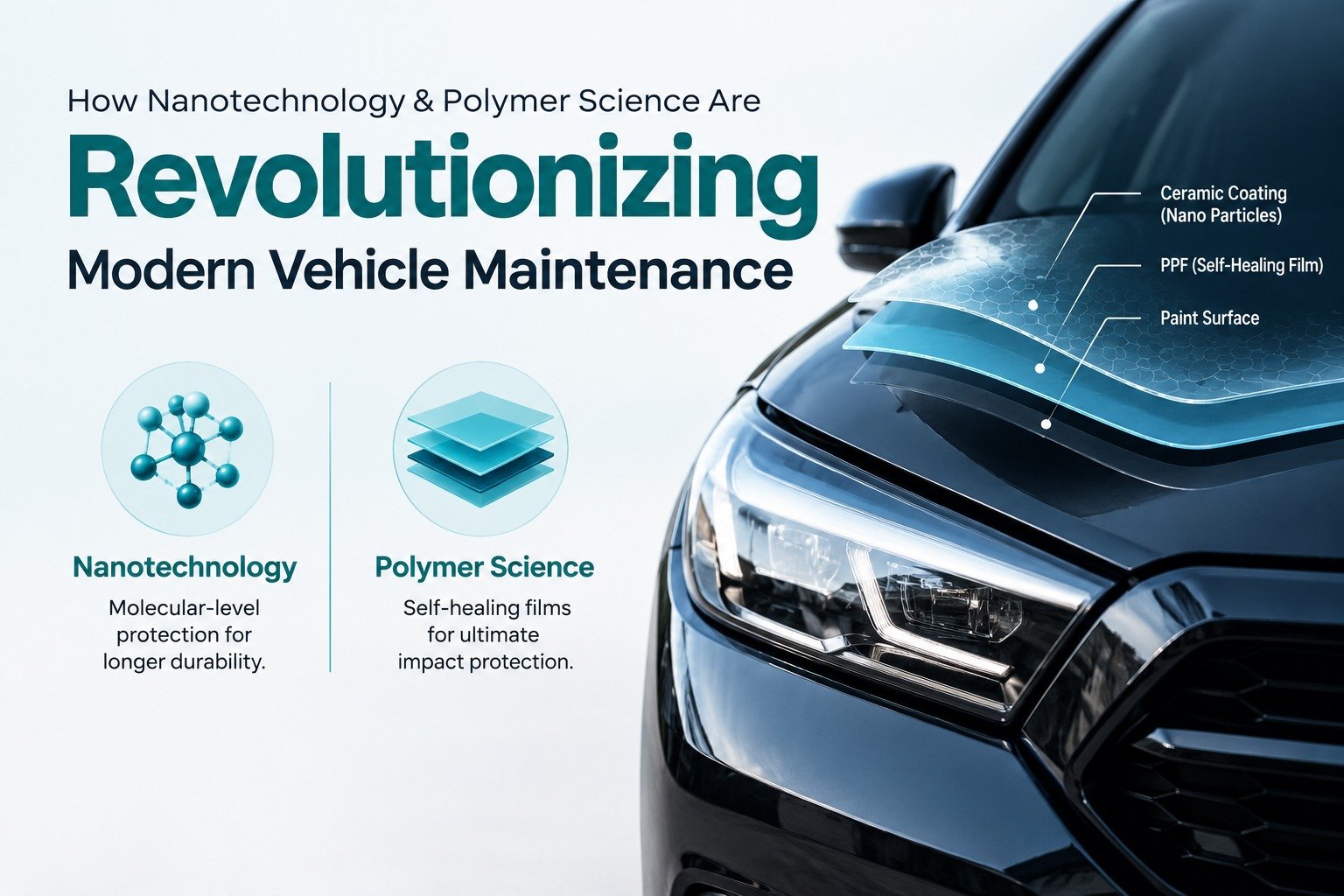
In the modern automotive industry, innovation is no longer confined to electric powertrains, autonomous driving software, or digital cockpit displays. Beneath the surface, material science and chemical engineering are quietly transforming how vehicle owners and fleet managers protect physical automotive assets.
For decades, basic surface maintenance relied on organic carnauba waxes and basic synthetic sealants. While effective for short-term gloss, traditional compounds offer minimal resistance against industrial fallout, UV oxidation, or physical abrasion.
Today, the convergence of nanotechnology and polymer chemistry is shifting automotive care from temporary cosmetic upkeep to permanent surface engineering.
1. Nanotechnology in Paint Protection: Molecular-Level Shielding
At the heart of modern paint protection is nanotechnology the manipulation of matter at the nanometer scale (1 to 100 nanometers). Modern ceramic and graphene coatings utilize nano-scale particles of Silicon Dioxide (SiO2), Titanium Dioxide (TiO2), or reduced Graphene Oxide (rGO).
Unlike traditional paste waxes that sit loosely on top of clear coats, nano-particles are small enough to penetrate microscopic pores and imperfections within factory automotive paint.
Key Technological Advantages:
- Covalent Bonding: The particles chemically bond with the clear coat, forming a semi-permanent, hydrophobic lattice structure.
- Hydrophobic Surface Tension: By raising the contact angle of liquid droplets above 110, water, grime, and environmental contaminants are shed automatically.
- Thermal & Chemical Stability: Nano-coatings withstand extreme temperature spikes and resist acidic or alkaline chemicals ranging from pH 2 to pH 12.
To ensure proper covalent adhesion, surface preparation such as paint decontamination and multi-stage machine correction is critical. Specialized service hubs like Amazing Detailing utilize precision surface prep standards to maximize nano-coating durability and optical clarity.
2. Advanced Polymer Science & Self-Healing Films
While ceramic liquid coatings provide chemical protection, physical impact protection requires polymer engineering. Paint Protection Film (PPF) commonly manufactured from Thermoplastic Polyurethane (TPU) represents the pinnacle of protective polymer technology.
Modern TPU films consist of multi-layered architectural designs:
- Top Clear Coat (Elastomeric Polymers): Features shape-memory properties. When exposed to heat (sunlight or warm water), micro-scratches and swirl marks automatically heal.
- Core TPU Layer: Absorbs kinetic energy from gravel, stones, and high-velocity road debris.
- Acrylic Adhesive Layer: Engineered for distortion-free optical transparency and clean removal without damaging factory paint.
3. The Economic Impact on Automotive Asset Preservation
From a business perspective, advanced vehicle surface protection goes beyond aesthetics; it directly impacts balance sheets and asset depreciation.
- Higher Resale Values: Preserving original factory paint condition prevents cosmetic deductions during vehicle appraisal or trade-in.
- Lower Maintenance Overhead: Hydrophobic surfaces drastically reduce the water, chemical, and labor costs associated with routine fleet washing.
- Longer Protection Cycles: While conventional wax degrades within 30 to 60 days, professional nano-coatings and TPU films protect surfaces for 3 to 10 years.
Conclusion
As automotive surface materials become more complex, vehicle care is increasingly driven by chemical technology rather than manual labor. The integration of molecular nano-coatings and self-healing TPU polymers offers vehicle owners unprecedented durability, protecting both the aesthetic appeal and long-term financial value of modern automobiles.
 Admin