
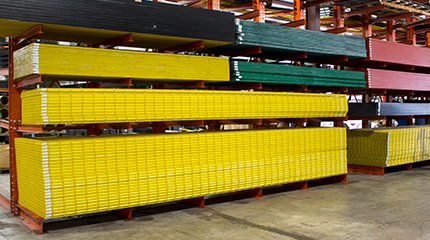
Modern infrastructure is evolving rapidly as industries demand materials that are stronger, lighter, safer, and more sustainable than traditional options. Among the most significant innovations driving this transformation is FRP (Fiberglass Reinforced Plastic) grating. At the center of this shift are FRP Grating Manufacturer companies, which are redefining how engineers, architects, and developers design and build industrial and commercial structures. Their products are replacing conventional steel, wood, and aluminum in a wide range of applications due to superior performance and long-term cost efficiency.
As infrastructure projects become more complex and environmentally conscious, FRP grating has emerged as a preferred solution. Its adaptability, corrosion resistance, and durability are making it a cornerstone in industries such as oil and gas, marine engineering, wastewater treatment, transportation, and construction.
Understanding FRP Grating and Its Core Properties
FRP grating is a composite material made from fiberglass reinforcements embedded in a polymer resin matrix. This combination results in a product that is exceptionally strong yet lightweight. Unlike traditional materials, it does not rust, corrode, or degrade easily when exposed to harsh environments.
A major advantage offered by every leading FRP Grating Manufacturer is the ability to tailor the product for specific applications. Depending on the resin type—such as polyester, vinyl ester, or phenolic—FRP gratings can withstand chemical exposure, fire, extreme temperatures, and heavy loads.
The structural design of FRP grating also plays a crucial role. It typically comes in molded or pultruded forms, both offering unique benefits. Molded gratings provide multidirectional strength, while pultruded gratings offer higher load-bearing capacity for industrial applications.
Advantages Driving Infrastructure Transformation
One of the main reasons FRP grating is revolutionizing infrastructure is its long list of performance benefits. Compared to steel or aluminum, FRP is significantly lighter, which reduces installation costs and structural load requirements. This makes it ideal for elevated walkways, platforms, and offshore structures.
Corrosion resistance is another major advantage. In industries like marine engineering and chemical processing, metal structures often fail due to rust and chemical exposure. FRP grating eliminates this issue entirely, ensuring longer service life and reduced maintenance costs.
Safety is also a critical factor. FRP grating is non-conductive, making it ideal for electrical environments. It also offers anti-slip surfaces, reducing workplace accidents in wet or oily conditions. A reliable FRP Grating Manufacturer ensures that safety standards are integrated into every design, meeting international regulations and industry requirements.
Additionally, FRP materials are low-maintenance. Unlike steel, which requires regular painting or coating, FRP maintains its integrity for years with minimal upkeep, making it highly cost-effective in the long term.
Role of FRP Grating Manufacturer in Modern Engineering
The impact of an FRP Grating Manufacturer goes beyond just producing materials. These manufacturers play a crucial role in research, innovation, customization, and engineering support. They work closely with project developers to design solutions that meet specific structural, environmental, and load-bearing requirements.
Customization is a key strength. Manufacturers can produce gratings in different sizes, colors, load ratings, and resin compositions. This flexibility allows engineers to integrate FRP solutions into highly specialized projects where traditional materials fall short.
Quality control is another critical responsibility. Leading manufacturers follow strict testing procedures, including load testing, chemical resistance analysis, and fire retardancy checks. This ensures that the final product performs reliably under real-world conditions.
Moreover, many FRP Grating Manufacturer companies are investing in advanced production technologies such as automated pultrusion lines and precision molding systems. This not only improves product consistency but also increases production efficiency, helping meet the growing global demand.
Applications Across Diverse Industries
FRP grating is widely used across multiple sectors, demonstrating its versatility and reliability. In the oil and gas industry, it is used for offshore platforms, walkways, and drilling rigs where corrosion resistance is essential.
In wastewater treatment plants, FRP grating withstands constant exposure to moisture and chemicals, making it ideal for walkways and tank covers. Similarly, in the marine industry, it is used on ships, docks, and piers due to its resistance to saltwater corrosion.
The construction industry also benefits significantly. Architects are increasingly incorporating FRP grating into modern building designs for stair treads, mezzanine floors, and ventilation covers. Its aesthetic flexibility allows it to blend functionality with design appeal.
Transportation infrastructure, including bridges and pedestrian walkways, is another growing application area. Lightweight FRP components reduce structural stress while maintaining durability and safety.
Sustainability and Environmental Impact
Sustainability has become a major focus in infrastructure development, and FRP grating supports this shift in multiple ways. Its long lifespan reduces the need for frequent replacements, thereby minimizing material waste. Additionally, many FRP Grating Manufacturer companies are adopting eco-friendly production methods, including low-emission resins and recyclable composites.
The reduced need for maintenance also means fewer chemical coatings and paints are required over time, which helps lower environmental pollution. Furthermore, the lightweight nature of FRP reduces transportation energy consumption, contributing to lower carbon emissions during logistics and installation.
As industries move toward greener building practices, FRP grating is becoming an essential material for achieving sustainability goals without compromising performance.
Future Trends in FRP Grating Technology
The future of FRP grating is closely tied to advancements in material science and manufacturing technology. One emerging trend is the development of high-performance resins that offer even greater fire resistance and chemical durability.
Smart infrastructure integration is another area of growth. Researchers are exploring ways to embed sensors into FRP structures to monitor load stress, temperature changes, and structural integrity in real time.
Automation in manufacturing is also expected to expand. Advanced robotics and AI-driven quality control systems will enable FRP Grating Manufacturer companies to produce more precise and efficient products at lower costs.
Additionally, demand is expected to grow significantly in developing economies where infrastructure expansion is accelerating. This will further drive innovation and competition in the FRP industry.
Conclusion
FRP grating is no longer just an alternative material; it is becoming a foundational element in modern infrastructure development. Its strength, durability, safety, and sustainability make it a superior choice for a wide range of industries. At the heart of this transformation are FRP Grating Manufacturer companies, whose innovation and engineering expertise continue to push the boundaries of what is possible in construction and industrial design.
As global infrastructure demands continue to evolve, FRP grating will play an increasingly vital role in shaping safer, more efficient, and more sustainable environments.