
In the automotive care industry, routine vehicle maintenance was once synonymous with a Sunday afternoon wash and a fresh coat of carnauba wax. For decades, paste wax served as the primary line of defense against dirt, water spots, and oxidation. However, as automotive paint formulas have transitioned toward environmentally friendly water-based clear coats, traditional wax can no longer provide the level of protection required by modern vehicle owners.
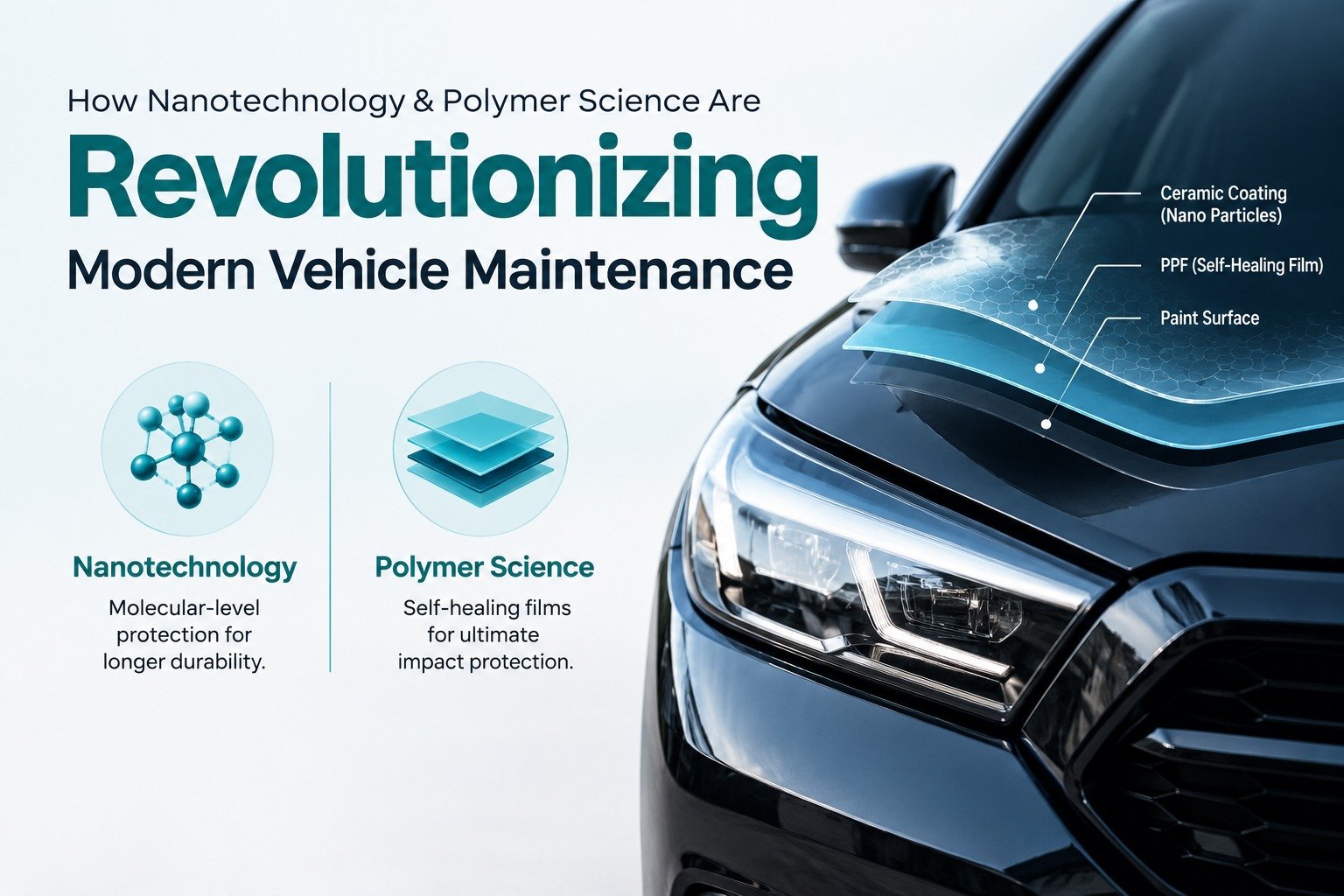
Today, advanced surface preservation technology, specifically Ceramic Coatings and Paint Protection Film (PPF) is rapidly replacing traditional waxing methods. Driven by advances in nanotechnology and polymer science, these long-lasting solutions offer superior durability, enhanced gloss, and long-term investment protection.
The Limitations of Traditional Carnauba Wax
While paste wax provides a temporary shine and hydrophobic effect, its lifespan is fundamentally limited. Made primarily from natural organic compounds, standard automotive wax degrades quickly under real-world driving conditions:
- Heat Sensitivity: Carnauba wax melts at relatively low temperatures (around 180°F), meaning ambient summer heat and engine warmth rapidly break down the protective layer.
- Short Lifespan: Most traditional waxes require reapplication every 4 to 8 weeks to maintain basic UV and environmental protection.
- Minimal Physical Resistance: Wax creates a slick surface layer but provides zero resistance against micro-scratches, swirl marks, rock chips, or chemical contaminants like bird droppings and acid rain.
Ceramic Coatings: Molecular-Level Surface Bonding
Ceramic coatings represent a quantum leap in liquid paint protection. Composed of Silicon Dioxide (SiO2) or Titanium Dioxide (TiO2), these liquid polymers chemically bond directly with a vehicle’s factory clear coat rather than simply sitting on top of it.
Key Benefits of Ceramic Coatings:
- Extended Durability: Unlike wax, a professionally applied ceramic coating lasts anywhere from 2 to 5+ years without degrading.
- Extreme Hydrophobic Properties: The ultra-smooth surface repels water, mud, and road grime, making routine cleaning faster and less frequent.
- Chemical and UV Resistance: The dense chemical barrier prevents oxidation and resists harsh industrial fallout, road salts, and chemical etching.
Because surface preparation including paint decontamination and machine polishing is critical to coating adhesion, car owners increasingly rely on specialized providers like Amazing Detailing to achieve a flawless, factory-grade finish before applying high-grade ceramic layers.
Paint Protection Film (PPF): The Ultimate Shield Against Physical Damage
For maximum protection against physical debris, Paint Protection Film (PPF) often referred to as a clear bra is the gold standard. Engineered from high-grade thermoplastic polyurethane (TPU), PPF is an invisible, high-impact layer applied to high-risk areas like front bumpers, hoods, fenders, and side mirrors.
Unlike liquid coatings or wax, PPF provides tangible physical impact absorption:
- Self-Healing Capabilities: Top-tier PPFs feature elastomeric polymer layers that heal minor swirl marks and light scratches when exposed to direct heat or warm water.
- Impact Resistance: PPF absorbs the kinetic energy of gravel, rock chips, and road debris, preserving the original paint underneath.
- Preserving Resale Value: Maintaining pristine original paint significantly boosts trade-in valuation, a factor highlighted by automotive valuation platforms like Kelley Blue Book when evaluating vehicle condition tiers.
The Hybrid Approach: Combining PPF and Ceramic Coatings
Vehicle owners no longer have to choose between PPF and Ceramic Coatings; the modern trend involves layering both technologies for full-spectrum defense.
In a hybrid application, PPF is installed on high-impact zones (such as the front bumper and hood) to guard against stone chips, while a ceramic coating is applied across the entire vehicle including over the film itself. This combined strategy delivers physical impact resistance alongside hydrophobic self-cleaning properties and deep visual gloss.
Conclusion: A Worthy Upgrade for Modern Vehicles
While traditional carnauba wax holds a nostalgic place in auto detailing history, it can no longer match the performance, longevity, or cost-efficiency of modern surface protection. For vehicle owners looking to safeguard their automotive investment against daily wear and harsh environmental elements, transitioning from temporary wax to ceramic coatings and Paint Protection Film is the modern standard for lasting preservation.
 Admin