
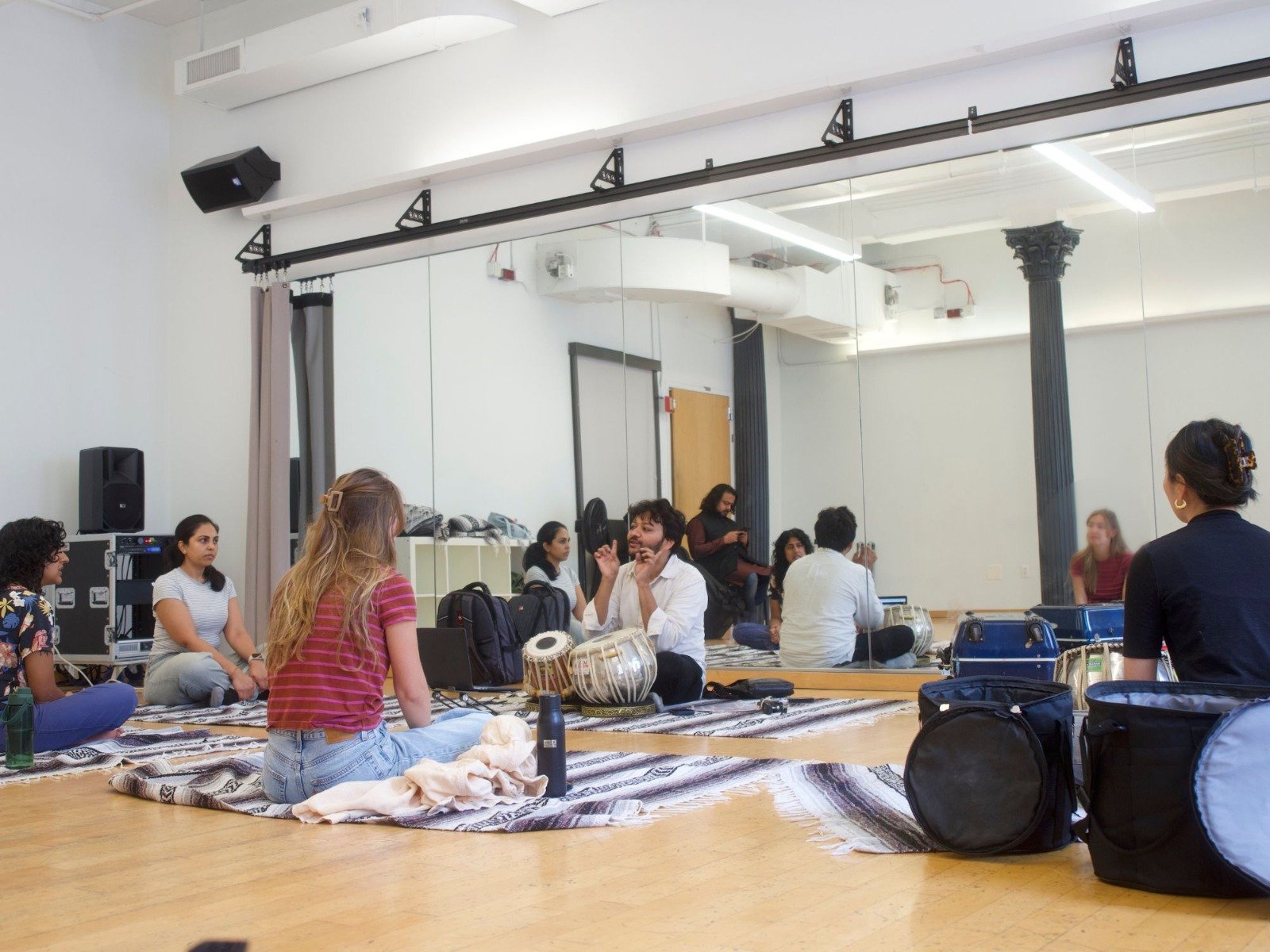
Music education has long been a cornerstone of cultural expression, technical skill development, and personal growth. For centuries, Western conservatories have emphasized a structured approach to teaching—building technique, ensemble skills, theoretical knowledge, and performance experience in a progressive manner. However, in today’s interconnected world, music educators are increasingly recognizing the value of global and cross-cultural experiences in enriching the learning journey. Incorporating diverse musical traditions, such as Indian classical music, African drumming, or Latin rhythms, can deepen understanding, expand creativity, and refine core competencies such as rhythm, phrasing, and improvisation. One fundamental skill that benefits immensely from cross-cultural exposure is rhythm, making rhythm training for musicians an essential focus.
Integrating Global Perspectives Into the Conservatory Curriculum
Western conservatories traditionally structure music education in stages, beginning with foundational technique, advancing through ensemble participation, and culminating in performance mastery. Introducing global perspectives within this framework can be highly effective. For example, students studying Western classical piano may benefit from exposure to Hindustani or Carnatic rhythmic cycles, which operate on principles of tala and intricate subdivisions. Similarly, string players or wind instrumentalists can explore modal improvisation and ornamentation techniques from non-Western traditions, offering alternative approaches to phrasing and expression.
Educators can implement structured modules in cross-cultural studies, providing a balance between theoretical understanding and applied practice. Such modules may include comparative rhythm analysis, study of non-Western notation systems, and interactive workshops with visiting artists. Integrating rhythm training for musicians in this context ensures that students develop not only technical precision but also adaptability and responsiveness to unfamiliar rhythmic structures.
The Role of Technique in Cross-Cultural Music Education
Technique remains the backbone of musical proficiency. However, cross-cultural experiences can challenge students to refine their technique in nuanced ways. For instance, percussionists exposed to tabla or mridangam patterns learn to articulate complex subdivisions and rapid accelerations that are uncommon in standard Western repertoire. String players practicing microtonal ornamentations in Indian ragas must cultivate exceptional finger dexterity and pitch control, while wind players exploring African or Middle Eastern wind traditions learn breath control for intricate rhythmic phrasing.
This blending of technical rigor and cultural fluency cultivates musicians who are both versatile and expressive. Rhythm training for musicians becomes particularly significant in this process. Exercises that combine Western metrical precision with non-Western rhythmic improvisation enhance timing, independence, and the ability to internalize irregular cycles. Over time, students develop a heightened sense of pulse and groove, skills that translate seamlessly into chamber music, orchestral performance, and jazz improvisation.
Ensemble Work and Cross-Cultural Collaboration
Ensemble participation is a defining element of conservatory training. Working with peers in orchestras, chamber groups, or jazz combos teaches listening, coordination, and interpretative consensus. Introducing cross-cultural collaboration into ensemble work adds a new layer of complexity and learning opportunity. Students might perform a fusion piece that combines Western harmonic frameworks with Indian rhythmic cycles, or collaborate with a West African drumming ensemble to explore polyrhythms and call-and-response structures.
Such experiences teach adaptability and deepen musical sensitivity. Rhythm training for musicians in ensemble settings ensures that each member can negotiate tempo changes, syncopations, and metric modulations confidently. Furthermore, students learn to appreciate the aesthetic logic of different musical traditions, fostering cross-cultural empathy and a more holistic understanding of music as a universal language.
Performance as a Tool for Cross-Cultural Learning
Performance is the ultimate test of musical education, providing a platform for both technical skill and expressive interpretation. When students perform music that incorporates global elements, they face the dual challenge of maintaining their Western-trained technique while honoring the stylistic nuances of other cultures. Solo recitals featuring ragas, jazz improvisation influenced by African rhythms, or chamber works that integrate Latin percussion all encourage students to synthesize knowledge across traditions.
In preparing for such performances, rhythm training for musicians plays a pivotal role. Mastery of complex cycles and rhythmic variations ensures confidence on stage and fosters musical independence. Additionally, cross-cultural performance often necessitates improvisation, requiring students to internalize patterns, anticipate transitions, and respond spontaneously. These experiences cultivate creativity and reinforce the principles of disciplined practice embedded in the conservatory tradition.
Progressive Curriculum Design for Cross-Cultural Competence
A forward-thinking conservatory curriculum can systematically integrate global music experiences. Beginning with introductory courses in world music theory, students progress to applied studies with guest artists and ensemble projects. Intermediate and advanced students might participate in immersive residencies abroad, learning repertoire in authentic cultural settings. Such progression ensures that exposure is not superficial but deeply embedded in technical and artistic growth.
Within this structure, rhythm training for musicians can be scaffolded from simple polyrhythms to complex tala cycles, gradually increasing both difficulty and expressive expectation. Assessment can balance technical accuracy with interpretative insight, encouraging students to develop a personal voice informed by multiple musical languages. By sequencing learning in this way, conservatories maintain the rigor and standards of Western pedagogy while embracing the richness of global traditions.
Benefits Beyond Technique and Performance
Cross-cultural musical experiences offer benefits that extend beyond technical proficiency. Students develop heightened listening skills, emotional intelligence, and cultural literacy. They become more adaptable, able to perform in diverse musical settings, and more reflective about their own musical heritage. Exposure to Indian classical traditions, for instance, fosters an appreciation for the spiritual and improvisational dimensions of music, while African and Latin rhythms teach resilience, timing, and communal expression.
Incorporating rhythm training for musicians into these experiences magnifies these benefits. Students not only learn to execute complex patterns but also to feel and communicate rhythm in a deeply intuitive way. This heightened rhythmic awareness enhances composition, improvisation, conducting, and collaborative performance, equipping musicians with tools that transcend genre and tradition.
Conclusion
Enhancing music education through global and cross-cultural experiences enriches both the skill set and the artistic sensibility of students. Western conservatory structures provide a strong foundation of technique, ensemble coordination, and performance, but exposure to non-Western musical traditions elevates that foundation to a higher level of versatility and creativity. By integrating rhythm training for musicians into cross-cultural curricula, educators cultivate performers who are technically proficient, rhythmically astute, and culturally sensitive.